
Performing Effective Termite Treatment Techniques to Rid Your Property of These Pests for Good
Every year, termites cause over 4 billion dollars in damage to homes. That’s more than floods and fires combined! Are you protected? Do you know the true condition of your home or property? We provide complete inspection and treatment services for wood-destroying pests. During our inspection, we will identify whether your property has termites, wood boring beetles, or some other form of wood decay. Our inspection will generate a report outlining the appropriate treatment or course of repair.
Schedule Your Free Inspection Today!
How to Spot Termite Damage
Since most infestations are not detected until evidence appears, termites can slowly and silently be destroying your home or business without you realizing it.
The key to discovering the sources of termite infestations starts with a thorough inspection. With over 120,000 homes and structures inspected, you can count on our team of professional inspectors to evaluate your problem and recommend the most cost-effective treatment method to eliminate your termite problem.
Subterranean Termites
Home and business owners usually become aware of an infestation during “swarm season,” when annual flights of winged termites (called alates) occur in structures. Termite swarmers are often mistaken with flying ants; however, swarmers lack the segmented body of the ant and have two sets of identical wings. After indoor flights, most alates can be found dead near windows or in sinks and bathtubs, usually with their wings still attached.
As with other termite species, Reticulitermes colonies contain three primary castes: the reproductives (king, queen, alates, alate nymphs, and supplementary reproductives), soldiers, and workers. Alates and soldiers are used for species identification.
Drywood Termites
Advanced Integrated Pest Management offers localized wood treatments with Termidor SC & subcontracts structural fumigations to a licensed Branch I operator. Typically, salt and pepper-sized pellets are found on windowsills or baseboards, indicating an infestation. If you have seen this type of evidence, call our office today to set up a FREE limited inspection to best determine the treatment method that will work best for you and your property.
Termite Damage
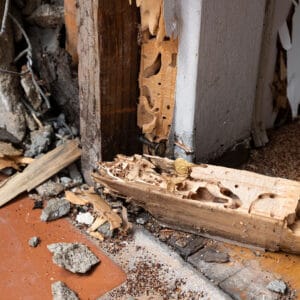
Because termites consume cellulose, the main structural components of plant cells, any wood material in a house is a potential food source, but they may also damage non-wood material in search of food. Because termites rarely show themselves in the open, infestations can be difficult to detect until damage becomes severe. In addition to the presence of alates and shelter tubes, wood material can be probed with a screwdriver or ice pick to locate infested wood. The surface of severely damaged wood may appear blistered or peeling, as termites hollow out the wood, leaving a paper-thin surface. However, it is not advisable to identify the termite species based solely on damage, as there are many exceptions.
Termite Control
Subterranean termite control may consist of drilling through concrete slabs, trenching, and treating under and outside of your home or business. We offer a Control Service Policy which guarantees that if termites reinfest your property at any time during the extended warranty, they will be treated for FREE. Call now and ask us about the details.
Wood Decay Fungi Damage
Commonly referred to as “dry rot”, wood decay fungi damage is typically the largest problem facing home and business owners.
Needing only a moisture source to grow, there are four main types of dry rot:
- Cubicle Brown Rot: Named because the wood turns brown and cube-like in appearance. When dried, infested wood will turn to powder when crushed.
- White Rot: Most often infesting hardwoods, the wood turns into a white, spongy, stringy texture. This type of fungi can spread quickly into adjacent wood members and cause significant damage.
- Soft Rot: Sometimes called “poria incrassata,” this type of fungi can attract and transport water several feet through large, root-like structures called rhizomorphs and spread into sound wood.
- Surface Fungus: Often seen as fungus blooms or white streaks on the surface of the wood, this infection is usually found under deck boards or substructure wood members where the moisture content of the wood rises above 15%.
Wood Destroying Beetles
After termites, wood-boring beetles are the most important wood-destroying insects in homes. Wood-boring beetle eggs are practically invisible to the naked eye, but the damage the larvae cause can be extensive. The amount of damage that wood-boring beetles cause depends on many factors. The type of wood (hardwood or softwood), the moisture content of the wood, and the environmental conditions at the infestation site all affect the severity of beetle damage.
There are several species of wood-boring beetles in California of concern to property owners. They are generally classified into those that infest hardwoods (oak, walnut, etc.) and softwoods (pine, spruce and douglas fir).
Wood-boring beetles can be very destructive to substructures, particularly those that have inadequate ventilation. Fumigation is the best method of eradicating wood-boring beetles.
Proper maintenance of your home will help prevent wood decay and preserve the life of your structure:
- Annual inspection
- Replacement of damaged wood
- Caulking and painting
- Annual treatment with fungicides such as Timbor or Bora Care